
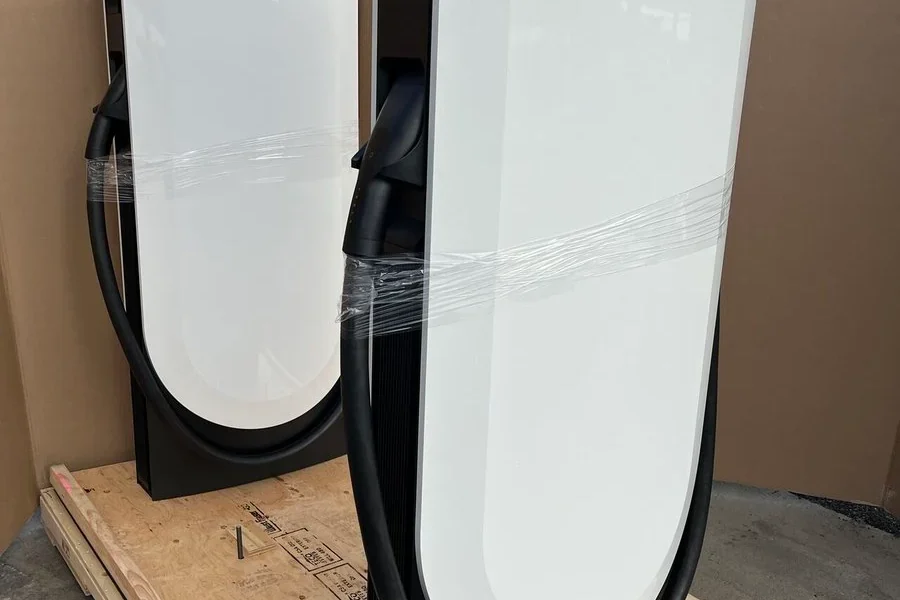

Forum Mobility has started installing Tesla Megacharger units at its FM Harbor depot at the Port of Long Beach — one of the largest port-based electric truck charging facilities in the United States. The units feature the Megawatt Charging System (MCS) standard and appear to be white-label configurations aimed at commercial fleet operators. Here’s what’s actually happening and why it matters.
What is Forum Mobility and what are they building at Long Beach?
Forum Mobility is an electric trucking infrastructure company focused on port environments. Its FM Harbor depot at the Port of Long Beach is designed to serve the heavy-duty Class 8 electric trucks that move freight in and out of one of the busiest cargo ports in North America. The facility is shaping up to be among the largest port-based EV charging sites in the country, and the newly installed Tesla Megacharger units are the centerpiece of that buildout.
What exactly is a Megacharger, and how does it differ from a Supercharger?
Megachargers are Tesla’s heavy-duty charging hardware, built for the Semi and similarly large electric vehicles — not passenger cars. Where a V4 Supercharger tops out around 250 kW, Megachargers operate at a fundamentally different power level suited to the massive battery packs in Class 8 trucks. The units at FM Harbor use the MCS (Megawatt Charging System) standard, an industry-wide protocol developed to enable charging at up to 1 megawatt or beyond. MCS is designed to be interoperable across manufacturers, which matters for fleet operators running mixed-brand trucks.
What does ‘white-label Megacharger’ mean?
According to Sawyer Merritt’s reporting, the units appear to be white-label versions of Tesla’s Megacharger hardware — meaning they carry Forum Mobility’s branding rather than Tesla’s. This is consistent with how Tesla has approached commercial infrastructure partnerships: supplying the underlying hardware and technology while allowing the operator to present it under their own brand. It’s the B2B equivalent of how some automakers supply drivetrain technology to fleet customers without consumer-facing branding.
Forum Mobility FM Harbor depot charging infrastructure overview at Port of Long Beach
Why does a port environment matter for this kind of infrastructure?
Ports like Long Beach operate fleets of drayage trucks — short-haul vehicles that shuttle containers between ships, rail yards, and nearby warehouses. These routes are short and predictable, which makes them ideal candidates for electrification: trucks return to a depot regularly and can charge overnight or between shifts. California has also set aggressive zero-emission drayage truck mandates, making port operators among the most motivated early adopters of heavy-duty EV charging infrastructure in the US.
Does this deployment affect Tesla Semi owners or Tesla passenger car drivers?
Not directly. Megachargers are purpose-built for heavy commercial vehicles and are not compatible with the CCS or NACS connectors used by Tesla’s passenger cars. If you drive a Model 3, Model Y, or Cybertruck, this infrastructure is separate from the Supercharger network you use. For Tesla Semi fleet operators, however, the FM Harbor deployment signals that third-party depot charging using Tesla hardware is becoming a real commercial option — not just a Tesla-owned network play.
What does this signal about Tesla’s commercial charging strategy?
Tesla supplying Megacharger hardware to a third-party operator for a non-Tesla-branded depot is a meaningful data point. It suggests Tesla is willing to function as an infrastructure vendor in the commercial trucking space — not just a vertically integrated operator. If this model scales, Tesla’s Megacharger hardware could become the de facto standard at port depots and logistics hubs across the country, regardless of which truck brands those fleets run. The MCS standard adoption here also positions Tesla’s hardware as interoperable rather than proprietary, which lowers the barrier for fleet operators who aren’t running Tesla Semis exclusively.